5 reasons why you must watch Babylon Berlin

Recently I decided to finally watch Babylon Berlin, it has been on my watchlist for a couple of years now and I don’t quite know what I was waiting for.

Needless to say, I watched all 3 seasons in like a week and now I’m reading the books it’s based on to be a little nerd and compare the two. This is something I do quite often, just to see if the book is better or if perhaps it’s one of those rare cases when the adaptation stands proudly superior to its source material…only time will tell.

Anyway, let’s get on with the show…

5 reasons you must watch Babylon Berlin

1. It’s a fascinating historical drama

And an utterly beautiful and frightfully expensive one at that (it’s the most expensive German tv show ever made!). Because the show is set in the late 1920’s you get fantastic fashion and music but you also get Weimar Germany, the interim between WW1 and WW2. It’s an utterly fascinating time and unlike all the characters in the show, we know what darkness lays ahead (the wall street crash and Nazis!) which makes for some great tv.

2. A homage to neo-noir detective stories

Hardboiled detective fiction never goes out of fashion, and this twisty and stylish adaptation really likes to play with traditional neo-noir imagery. The main detective Gereon Rath (Volker Bruch) is almost never without his hat and trench coat and his shadow is often present on-screen too especially if he’s hunting down a criminal. There’s also a very Fritz Langesque ‘talkie’ film at the centre of Season 3’s mystery and how the whole crime unravels feels very pulpy and I loved the vibe.

3. The soundtrack

The background music really makes all the difference and immerses you even deeper into the story and the time period it is set in and helps build tension in all the right places. There’s also a couple of performances and dance moments that are really fantastic, especially the one in episode 2 that introduces you to the song ‘Zu Asche, Zu Staub’ (to ash, to dust) which becomes a reoccurring motif throughout the first 2 seasons and tbh I can’t get enough of the song and the several remixes that have been released.

4. A fantastic will they won’t they relationship

Herr kommissar, eh hem I mean Inspector Gereon Rath has a very complicated love life and things get even more complicated when the intelligent, beautiful and ambitious Charlotte Ritter (Liv Lisa Fries) enters his life. They grow closer and closer together over the seasons and the chemistry between Bruch and Fries is brilliant, I challenge you not to root for the two while watching.

5. You like very ambiguous characters and political intrigue

Game of Thrones was once the pinnacle of TV, it was a cultural phenomenon that entranced viewers (myself included) because of its dark themes, characters with very questionable morals and firecracker political tension. Babylon Berlin has all of these in spades and fingers crossed it doesn’t lose all sense and sabotage character arcs as it continues to be adapted. Sorry GOT, you really did shoot yourself in the foot!

and one more for luck

6. The elevator

Yes, you read the right. Some scenes of the show are shot at Rathaus Schöneberg (the city hall of Tempelhof-Schöneberg) and many of those scenes include the trippy Paternoster Elevator. I mean just look at how cool it is…

tumblr_8baa8846f0cd4a3dc19e5c5201200f5e_c4935899_500.gif

Well, it’s safe to say that I am obsessed with Babylon Berlin and I can’t wait for season 4 to come out next year!

Babylon Berlin is available to watch on Now TV

Book Review: Doctor Glas by Hjalmar Söderberg

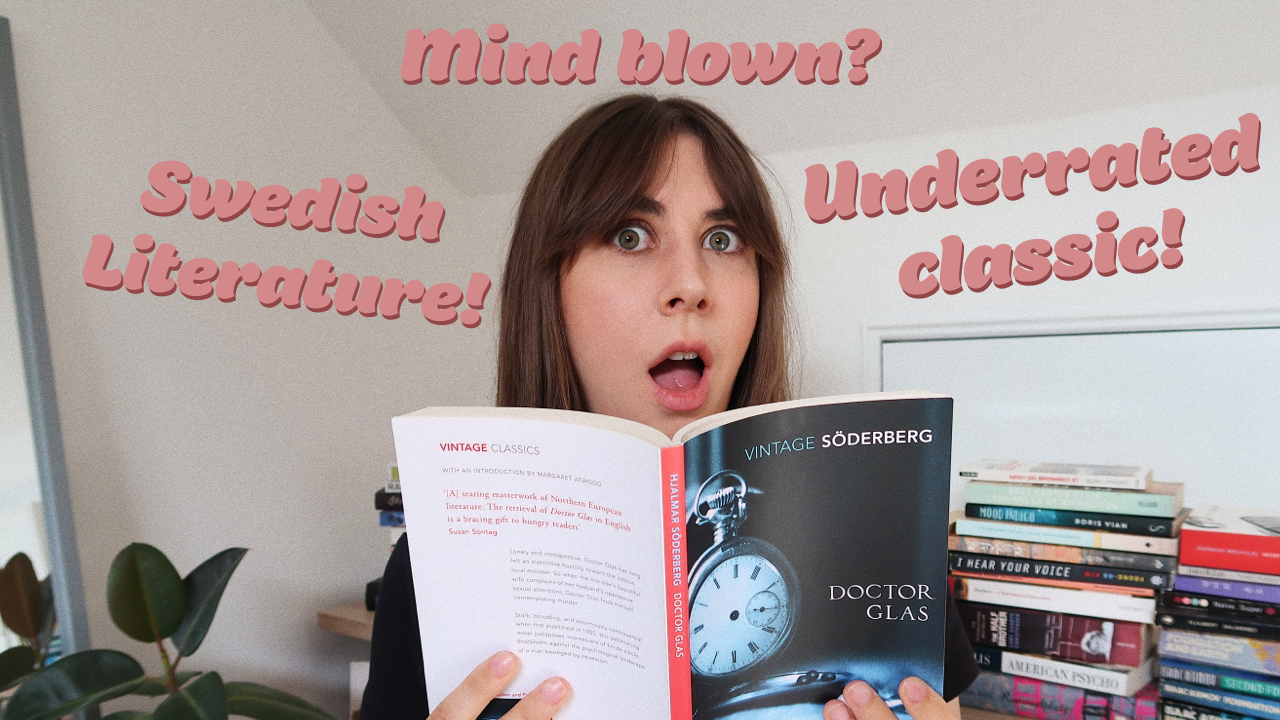
Swedish author Hjalmar Söderberg’s novel Doctor Glas is a classic, a very underrated classic. It was published in 1905 to much controversy and has remained rather unknown ever since…well perhaps to English speaking audiences that is (if your Swedish let me know if you’ve read it!).

Watch my review to hear all my thoughts on the book including who I think would turn it into an amazing film (because lets face it I can’t not talk about films!).

Buy your copy here:

Bookshop.org

Abebooks

Waterstones

Book Depository

These links are affiliate links so I’ll earn a couple of pence if you use them to buy the book.

August Wrap Up: Books & Movies

So I watched more than 30 movies in August, in my defence some were short films so… but tbh I had a blast so I don’t really need to excuse myself. Cinema is one of my biggest passions and from time to time I’ll get completely consumed by it and thats kind of what happened this past month.

Find out what films and books I read in August:

Undine: Architecture and Myth in Berlin

Undine is an exquisite and hypnotic reimagining of the Undine myth set in modern-day Berlin.

The German romantic drama film is by one of the countries most celebrated directors, Christian Petzold and stars critically acclaimed actors Paula Beer and Franz Rogowski as lovers, Undine and Christoph. Undine had its premiere at the 70th Berlin International Film Festival, where it was shown in competition for the coveted Gold Bear Award. The film ultimately secured Beer with the Silver Bear for Best Actress for her mesmerising performance as a reluctant water nymph.

In Undine, Paula Beer and Franz Rogowski are reunited with their Transit director, and let me say this trio is magical. The chemistry between Beer and Rogowski is electric here, and I found myself completely enamoured by Undine and Christoph’s courtship. They may have a semi unbelievable first encounter where a fish tank shatters, but it certainly is an enchanting one, and that’s down to the way Petzold shoots the moment. It’s a moment full of whimsy, but it juxtaposes nicely with the rather unfortunate breakup Undine suffers at the beginning of the film. 

Petzold himself said in an interview with Indiewire, “As the water pours over them, they’re lying next to each other like on a beach. They open their eyes like a rebirthing scene, wet with mud and old fish. They look at each other, and the first thing they see are the eyes of the other. That’s a good start for a love story.”

I also like the fact that their courting after this almost magical first encounter takes place in ordinary and unremarkable places, which Petzold does deliberately. In a talk with fellow German director Heinz Emigholz and NYFF program director Dennis Lim, he said he didn’t want to film the love story in romantic locations. Petzold instead opted to use ordinary spaces so that the romance can ‘bewitch’ these places and transform them from something banal to something other. He also refers to a line from a poem by Joseph von Eichendorff that inspired him ‘Schläft ein Lied in allen Dingen’ (A song sleeps in all things), which I think is a rather beautiful sentiment. You can certainly see this idea has been considered throughout the movie (and in his other films too). 

The other striking thing about the use of place in the film is the links to architecture and Berlin itself. Undine is a historian who gives talks about urban development, which on its own is pretty cool. But when she talks about the city’s origin, she mentions the etymology of Berlin’s name; it means ‘swamp’ or ‘dry place in the swamp’. Therefore the city like Undine has a connection to water that has been severed, and she has, in a way like Berlin, been urbanised, transformed and separated from her elemental origin. Later in the film, she rehearses a talk in front of an enraptured Christoph (such a beautiful moment!). There she talks about the Humboldt Forum, a 21st-century museum in the centre of Berlin that was modelled on an 18th-century building that once stood in the exact same place and an architectural theory that suggests that progress is impossible. A neat bit of foreboding, which is mirrored in Petzold’s cyclical direction which features recurring motifs of mysterious Catfish sightings (more on him in a minute!) and characters returning to the same locations in search of evidence of events taking place. 

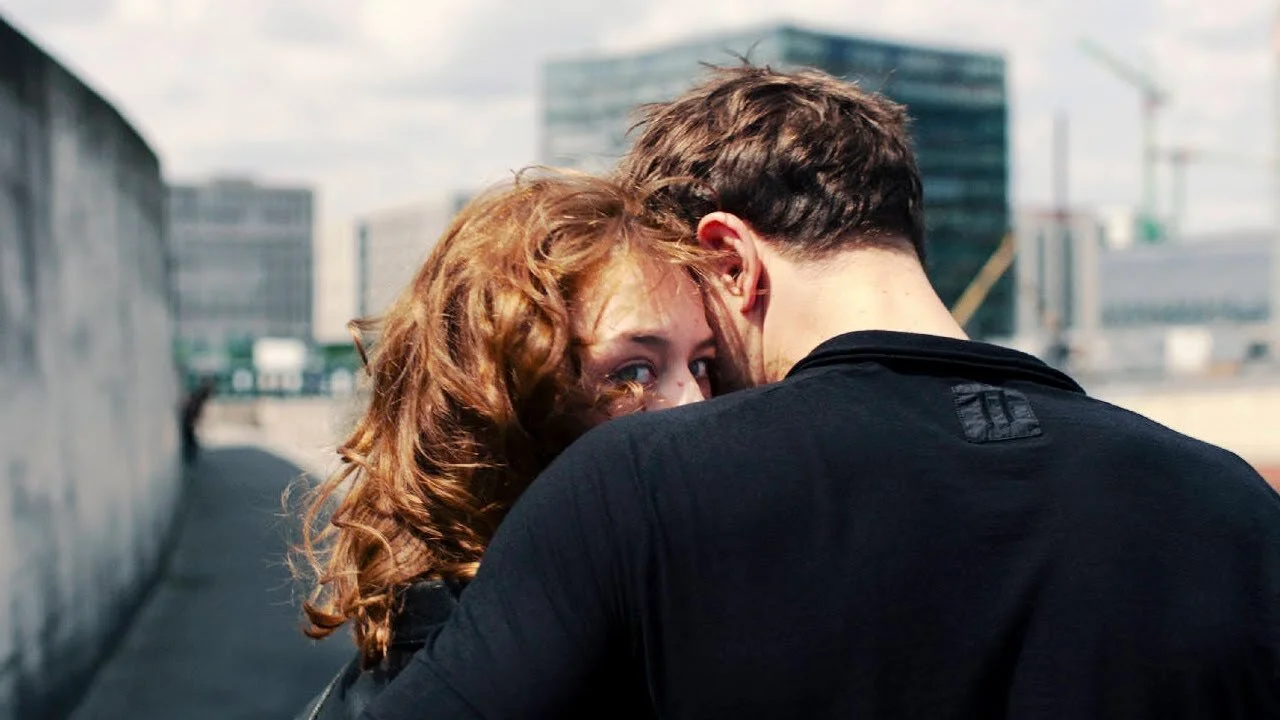
Another of my favourite moments in the film is where the shot of Undine looking over Christoph’s shoulder for the poster originates. It’s simple; we follow the two as they wander along in each other’s arms, as if completely smitten and unable to be separate from one another’s embrace for any length of time. The music and the atmosphere is beautiful until Undine sees Johannes, her previous boyfriend, with another woman. The camera then sweeps around to follow them walk past, and Undine peers over Christoph’s shoulder. This signifies a turning point in the film and that despite her growing bond with Christoph, her fate is catching up to her.

“Du kannst nicht gehen. Wenn du mich verlässt, muss ich dich töten”

“You can’t go. If you leave me, I’ll have to kill you“

So let’s talk about Gunther the catfish. He’s named after a character from the Nibelungenlied an Old Germanic text, very much like The Prose Edda and other mythological/legendary tales from medieval times. This little literary reference adds another texture of myth and mystery to the setting of the water, which as a dam is a natural place that has been industrialised. It’s an archaic place that has been transformed and acts as an intersection between the modern world and the world of mysticism, note that both Undine and Gunther reside there. This also connects back to the original romantic story by Friedrich de la Motte Fouqué, the river is so imposing in the novella that it strands characters for a period of time, however here in the modern age man has tamed the river. Petzold said in an interview that people are becoming distant from the myths and legends of the earlier years and this setting most definitely suggests that and offers us the chance to reflect on this fact.

In conclusion, I think I have found a new favourite in Undine. I love unusual romances that are sprinkled with magical realism and a sobering dash of doom. I love the performances by Beer and Rogowski, and I think Petzold has crafted such a beautiful film with so many textured layers to unpack. On the first watch, it is a whimsical love story; on the second watch, it's a meditation on time, place and autonomy…I can only wonder what a third watch will have in store for me. But ultimately, it's the intertwining of love, architecture, poetic doom and mysticism that makes Undine a film that will keep me coming back re-watch after re-watch.

ezgif.com-gif-maker (1).gif

German Film Review: Fear Eats the Soul by Rainer Werner Fassbinder

Angst essen Seele auf (Fear eats the soul) is directed by Rainer Werner Fassbinder and stars Brigitte Mira and El Hedi ben Salem. The film follows Mira as Emmi, an older German woman who is a mother of three adult children and a widow who meets and falls in love with Ali, a much younger migrant worker from Morocco.

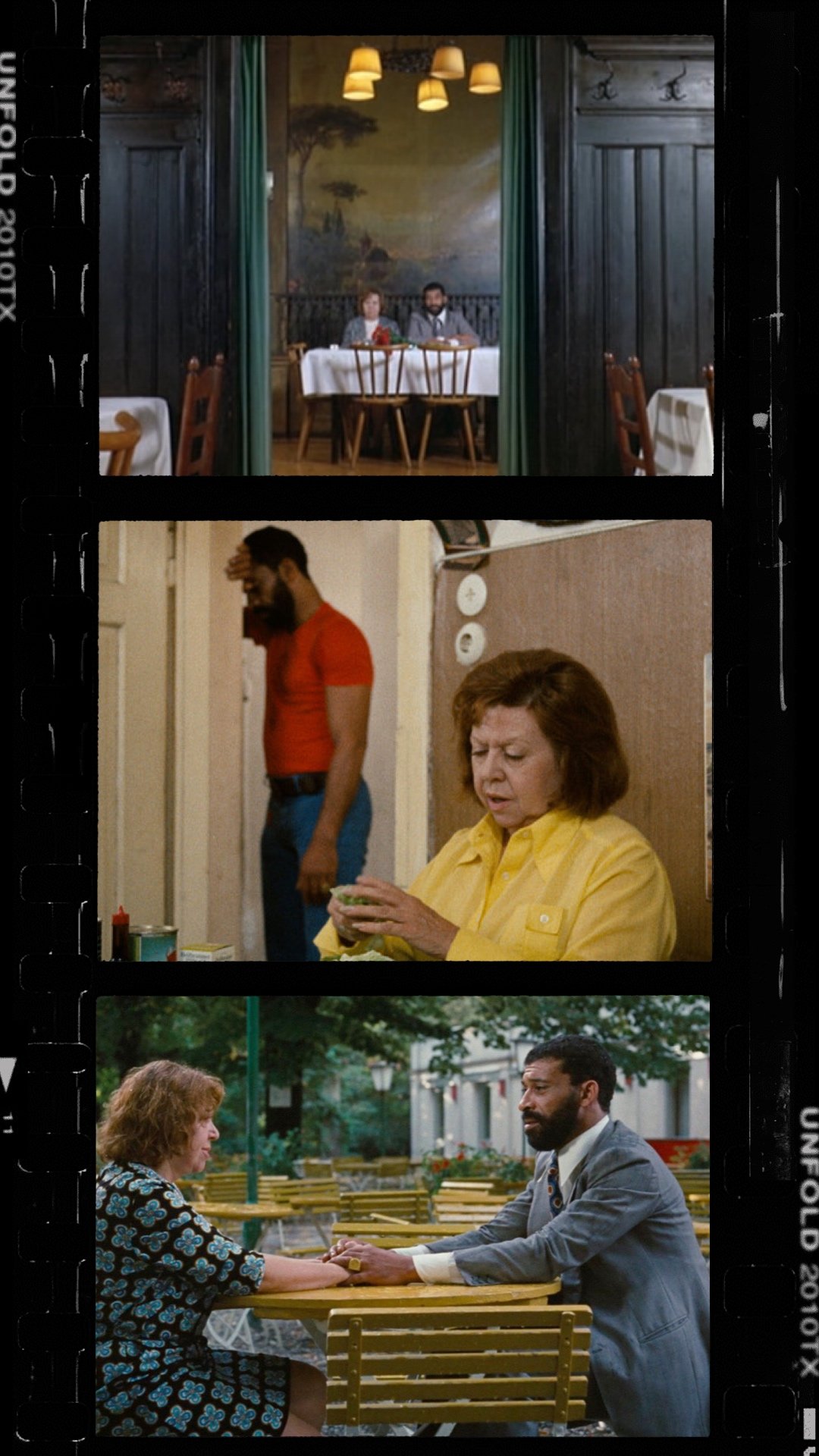
This was my first foray into Fassbinder’s filmography, and I must say it’s brilliantly shot. I love all the claustrophobic framing through doors, which reflects the crushing limits society puts upon the protagonists. Likewise, the scene outside amongst the sunshine-yellow tables is a particularly beautiful moment, but it again adds to the idea of isolation as the couple are completely alone; they can have a tender moment in public only because the scene is unpopulated by other prying eyes.

But what’s most shocking and really quite sad is that a film made in the 1970s about racism, ageism and prejudice feels just as relevant now, and while we have progressed slightly, we are nowhere near to where we need to be!

Fear Eats the Soul is a must-watch and a great introduction to a master of German cinema. I’m intrigued to watch more of his films, one for the fact that Fassbinder was a filmmaker that dared to push boundaries and famously proclaimed, ‘I don’t throw bombs, I make films.’ and because Fear was just such a great place to start.