October Books

October seemed like such a fast month, it was as if I blinked on the 1st and suddenly when I opened my eyes again it was the 31st. I also hit a bit of a reading slump this month as I only managed to finish 2 books.

Exciting Times by Noaise Dolan

Touted as the next Sally Rooney, Noaise Dolan’s debut novel Exciting Times has been sitting on my TBR list for quite some time. I finally got round to reading it and found that while it was a little like Rooney’s work it was also very different in many ways. While I enjoyed the book and its presentation of modern relationships and sexuality, I did think that it could have perhaps been a little more concise.

Brave New World by Aldous Huxley

I really enjoyed this book, and I was actually quite surprised at how readable Brave New World is considering that it was written in 1931. The concept of control through pleasure and complete balance in society is utterly compelling and quite scary and I really enjoyed Huxley’s witty jabs at consumerism and modern life which eerily seems more and more accurate nowadays! My one criticism about the book would be the idea of the “Savage Reservation”, this hasn’t aged very well at all and could be seen as highly offensive to Native Americans. While I am aware that the Savage Reservation represents an antithesis to the highly controlled World State and is most likely used as a satirical device Huxley nevertheless descends into damaging stereotypes of Native American culture.
Norwegian Cinema: Thelma film Review

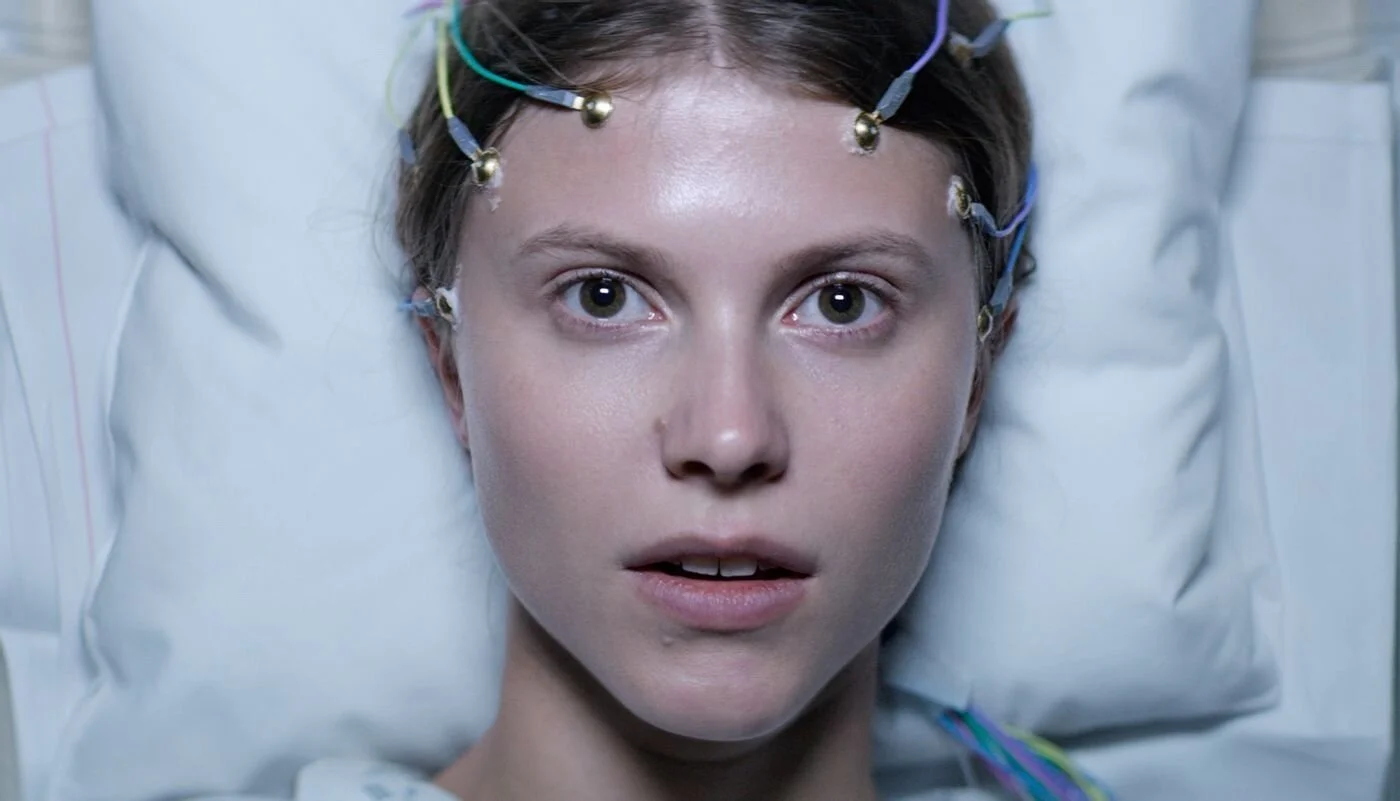
Thelma is a supernatural thriller directed by Joachim Trier and stars Eili Harboe in the titular role. This Norwegian film is a fresh and complex take on “superhero” powers that navigates themes of sexuality, trauma, religion and self-discovery.

The film’s eponymous heroine Thelma is able to make things happen; if she wants something, she can manifest it or quite terrifyingly, make it disappear. Narratively, the exploration of such a supernatural power is rich ground for storytelling, and that’s exactly what Trier has achieved here.

Thelma is a beautifully dark coming-of-age story about a sheltered young woman discovering her identity both as an individual away from her overbearing family and in terms of her sexuality. While her dangerous gift could have just become a metaphorical symbol of her otherness or a delusion born out of repressed sexuality, Trier doesn’t settle for a cinematically metaphoric storyline only. This supernatural gift is real and has very tangible consequences in the film, and a flashback that unfolds alongside the main action of the narrative is rather intense and harrowing and brings the film to a crescendo before the final act.

I also liked how in an interview, Trier said that he wanted to make a film that pays tribute to all the people who feel like “freaks” who don’t fit in and still try to find acceptance in that fact (VG, 2017). And at its most basic, that is exactly what Thelma is, a freak finding her place.

“I feel angry with you, God. Why are you doing this to me? What do you want?”

Visually, Thelma is stunning. There are lingering shots of nature, erotically charged visuals involving snakes, a very Bergmanesque nod to Persona and stunning moments of VFX that bring the consequences of Thelma’s ability to life.

There is also a really clever visual at the beginning and end of the film where the camera pans in and later away from the crowded Frederikkeplassen (the centre of the UiO Blindern Campus), illustrating the sense of one person being lost in a sea of people.

Another sequence that I found to be particularly beautiful was at the Oslo Opera house; I love the way in which the ballet performance on stage melted into shots of Thelma on the brink of an anxiety-induced seizure. Both elements complimented each other and created frenetic energy that really built up the mounting tension of a rising panic attack.

The colour palette used in Thelma is also rather beautiful, as dark, brooding and cold colours are employed for the most part. However, there are moments where a rich blood-red or lush natural green pierces the shot; these snaps of intense colours symbolise danger and transgressing against the norm and are often seen when Thelma has no control over her ability.

4 images from Thelma film. One of Thelma lying on grass, another with a snake coming out of her mouth, a third which is Bergman like (Persona) with two faces overlapping each other and the 4th is a boat on fire

Autumn Tag

As I love this season so much I thought I would do this Autumn Tag created by Jennily.

1. Hot Chocolate – what is your comfort book?

Um, I’m not too sure about this as most of the books I read aren’t exactly comforting! An obvious choice would be Harry Potter but I can’t really choose those books as I’m still making my way through the series for the first time. But I guess maybe something like Pride and Prejudice, who doesn’t love a good romance and a happy ending?

2. Pumpkin Carving – what is your favourite creative outlet?

I love writing and taking photos. I also kind of love and hate painting, it’s a strained relationship mainly because my skill is completely lacking. I’m like the artist in Disney’s Hercules

Hercules Artist .gif

3. Falling Leaves – changes that appear bad but you secretly love?

I love the transience of life, so I am always welcoming changes and new beginnings. But perhaps the most recent change was moving to the countryside. I thought I was going to be bored and stuck in the middle of nowhere. I kinda am but because of COVID, I have come to appreciate how lucky I am with all this open space around me and how safe it is here!

4. Pumpkin Spiced Latte – something you love that others tend to judge

Art house films, most people I know think they are boring and super pretentious. And don’t get me started on non-English art house films. I just don’t get peoples aversion to subtitles!

 5. Bonfire Night – what makes you explode with joy?

Travelling, I feel so utterly and completely euphoric when I visit a new place or new country. There is just something so beautiful about it. I can’t wait to be able to start doing this again! Other things include watching an amazing film, reading a brilliant book or visiting galleries and museums.

6. Fright Night – favourite scary book or film

I’ve never read a horror book and I’m not a massive horror film fan. But, I have been trying to get into them recently and I must say that I have rather enjoyed Peter Strickland’s Berberian Sound Studio and In Fabric. But maybe the best horror film I’ve seen is Midsommar (what a ride!).

7. Halloween candy – favourite thing to eat

At the moment it’s all about Apples! Apple cake, apple pie, apple crumble, cinnamon apple porridge.

8. Scarves – your autumn ‘must-have’ accessory

Knitted Jumpers, tights, boots, blazers, scarves. And maybe a few great books, right now I’m looking forward to reading Under the Jaguar Sun a short story collection by Italo Calvino, The Prose Edda by Snorri Sturluson and some Dostoevsky by way of Crime and Punishment. Oh, and of course all the books in my Autumn Reading List too.

 
IMG_9657.JPG
 

9. Fire – a book or film that burns your soul

Could it be anything other than Portrait of a Lady on Fire? And maybe In the Mood for Love. I’m clearly into unfulfilled love affairs. What on earth does that say about me. In terms of books maybe Angela Carter’s writing, she is a magician with words and I love how flowery her prose is.

10. Toffee apples – a book or film that seems one thing but really has a different inside

Korean movies in general. Um, maybe 2001: A Space Odyssey, it could be seen as just a science fiction film but really it’s an epic story of human ambition. Lars von Trier’s Nymphomaniac, it’s a clever and funny character study of a sex addict, but most people think it’s just gratuitous.

I tag everyone!

Little Joe Film Review

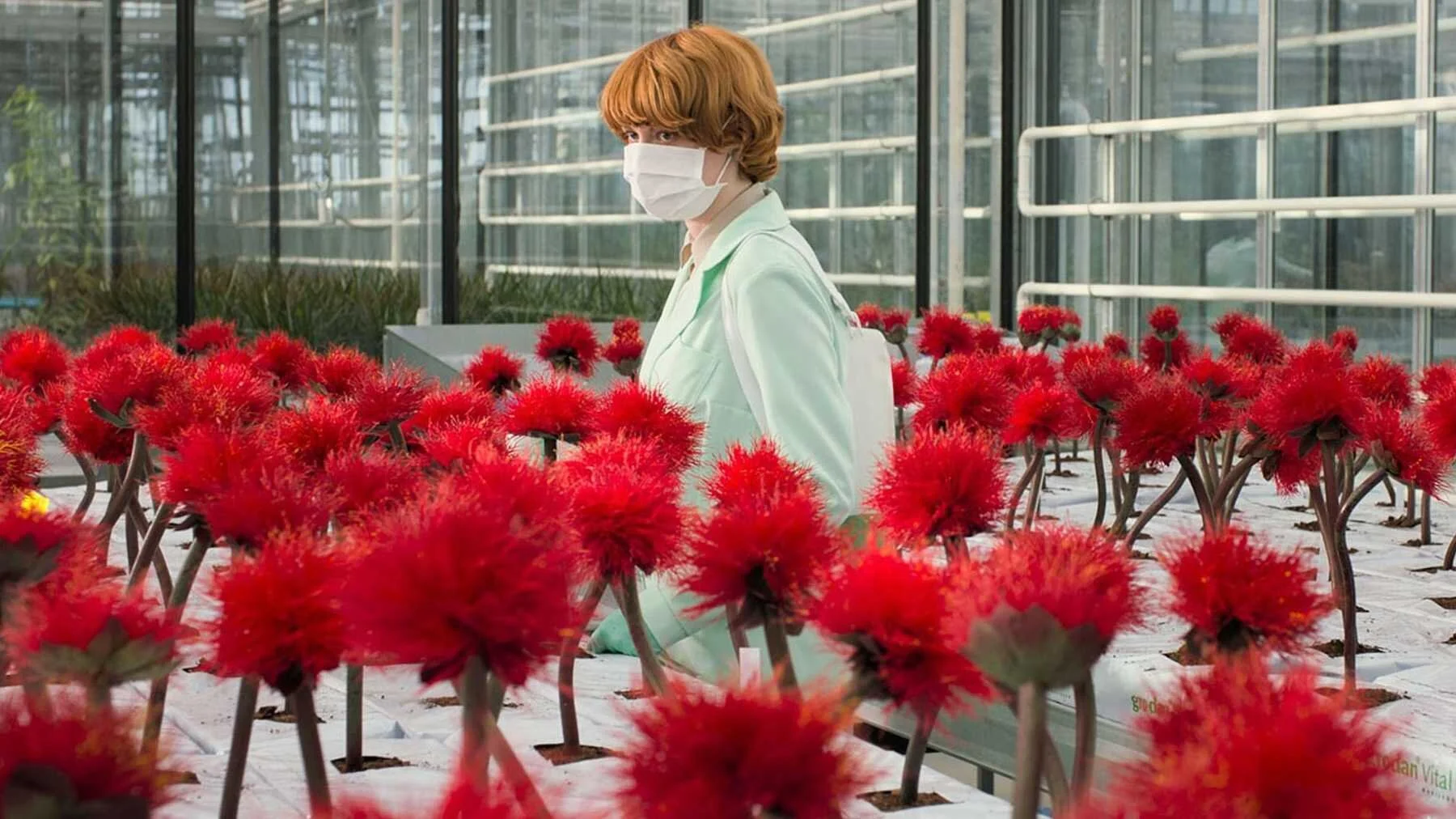
Directed by Jessica Hausner Little Joe is an indie sci-fi horror that explores genetic modification and motherhood. Emily Beecham stars as Alice Woodard, a plant breeder who has created a new species that gives its owners intense joy…but at what price?

Narratively Little Joe is interesting, there is a clear exploration of deep themes: the mood altering effects of pharmaceuticals, the trials of motherhood and the bastardization of nature through genetic modification just to name a few. But, I would be inclined to say that what really makes this film quite special is the symbolism displayed through visuals and audio.

The colour design of this film is one of its most striking features. The lab and uniforms are a pale montone green which are directly juxtaposed with the vibrant red plumage of the Little Joe plant. This use of complementary colours creates a sort of visual symbiosis between the scientists and the plants, but as the film progresses it is clear that this visual harmony is indeed superficial and something far more nefarious is at work. Elsewhere, the colour design sticks to a closer palette of greens, oranges and yellows or the intense mixing of purple and red, the former displaying order and familiarity and the letter another expression of danger.

The camera moves very methodically to create a sense of control and sterileness which soon becomes creepy as it is too perfect. Moreover, this precision of the camera movement also acts as a parallel to what is happening within the lab, the modification of nature has morphed the characters into automatons, they become focused on one singular goal the propagation of the plant as it can’t reproduce on its own.

Another way in which Little Joe creates unease is through its erratic soundtrack. There is an eerie exoticness to the sounds and irregular rhythms which no doubt was used to mirror the strangeness of the plant. And while it can become a little distracting at times for the most part this soundtrack added a curious texture to the film and enhanced the mood.

IMG_9570.jpg

Overall, Little Joe is a peculiar little film that will leave you reeling long after the credits, it’s full of beautiful visuals, uncanny commentaries on society and a really fantastic central performance by Emily Beecham who quite rightly won the Best Actress Award at Cannes last year.

September Books

Full disclosure, I have been reading a little less recently because I have been watching too many films (although the Swedish master director Ingmar Bergman would disagree, the man was known to watch three films a day when he was alive!) but nevertheless I did manage to read four books in September.

Madame Bovary by Gustave Flaubert

I really liked this novel and I feel like I am going to devour more of Flaubert’s prose ASAP as I really enjoyed his realism and wit. I also found Madame Bovary to be a bit alarming too as I found myself sympathising with Emma quite a bit even though she was ungrateful, adulterous and selfish. But I could understand her distaste for the banality of marriage and provincial life because of all the exciting and sweeping romantic novels she read in her youth.

Diary of an Oxygen Thief by Anonymous

This is quite a naked novel, in the sense of rawness that is. However, a review on the blurb does claim it to be a ‘kinky, artsy’ novel which I didn’t really see myself, but perhaps that’s because I’ve watched far too many European films for me to consider something like this ‘kinky’. Mostly, I am intrigued by the fact that this novel (and its sequels) was published anonymously, I wonder what possessed the author to detach themselves from the work.

All in all, Diary of an Oxygen Thief is not spectacular writing but it’s an interesting portrait of humiliation and human fragility and that was enough for me.

IMG_9552.JPG

Venus in Furs (Venus im Pelz) by Leopold von Sacher-Masoch

Yes, the surname of this author is why Masochism is called Masochism. And while you might think Venus in Furs must be a rather depraved book as a result, you must remember that this was published in 1870, so by modern standards, it’s pretty tame. Go read Bataille if your looking for something more transgressive. Overall, I found this book rather dull, in some places the writing was beautiful but for the most part, it was too repetitive and I found myself willing the story to end.

Colourless Tsukuru Tazaki and His Years of Pilgrimage (色彩を持たない多崎つくると、彼の巡礼の年) by Haruki Murakami

Wow, it’s been a while since I’ve read Murakami, which was completely intentional as I want to slowly plod through his work as he is one of my favourite authors. However, I found Colourless Tsukuru Tazaki to be quite a mediocre entry into the author’s oeuvre, sure I read it all and enjoyed it but it didn’t hit me with anything new or particularly profound (not that all literature needs to do that) which I guess I was expecting. I don’t know, there was a great passage towards the end but, the novel as a whole…it was fine, I guess.