Korean Cinema: 버티고 (Vertigo) Review

Directed by Jeon Gye-soo, Vertigo explores Seo-young’s life in corporate Korea. It’s a dizzying world of uncertainty where simply being seen wearing a hearing aid could lose her a contract renewal. Seo-young’s secret affair with her handsome and popular boss is also another risk. Soon her life begins to spiral out of control when her inner ear problem causes her to start experiencing Vertigo in her high-rise office.
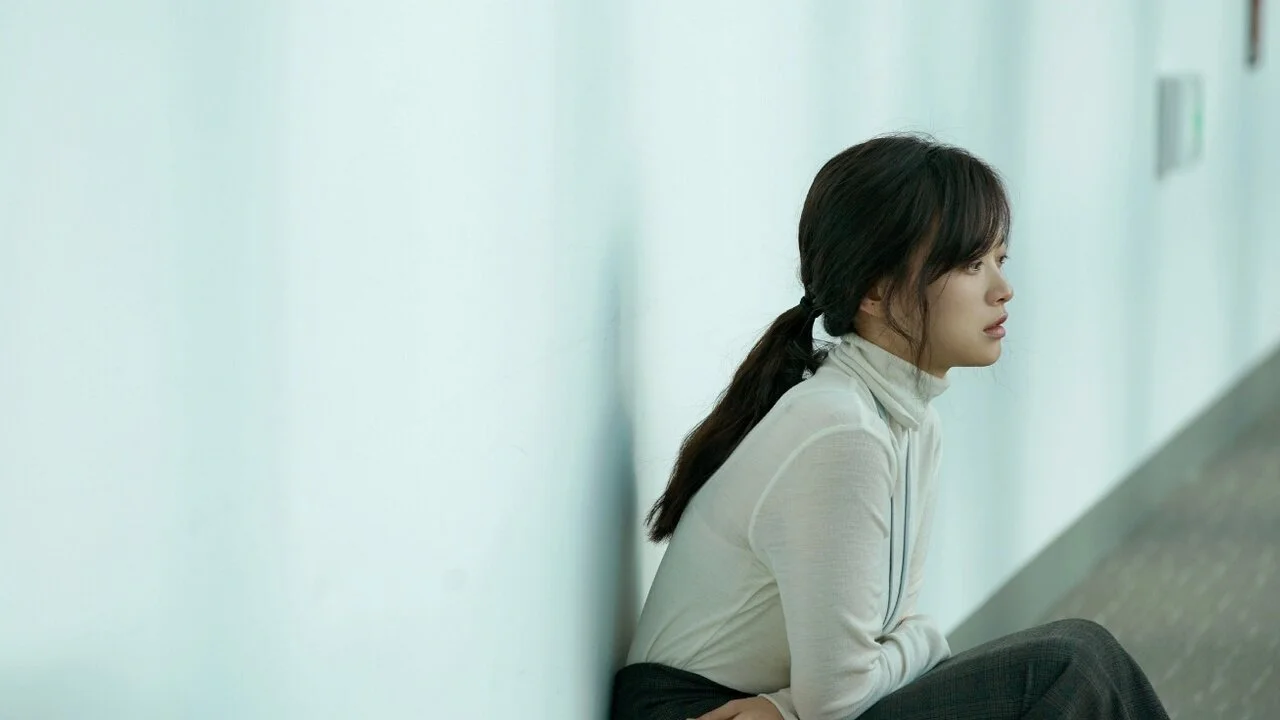
 I watched this film as part of the London Korean Film Festival, which went digital this year as a consequence of the COVID-19 pandemic. This was a kind of stroke of luck for me as I have wanted to see Vertigo for quite a while, and I wouldn’t have been able to see it at its originally planned screening in London.

Narratively the central focus of the film is on Seo-young, but Vertigo also explores two men and their connection to her. Seo-young is very much in love with her boss Lee Jin-soo (Teo Yoo from the fantastic Russian film Leto!), which is displayed through her looking at him longingly while he religiously works and how she seeks physical contact with him.

His distance and unavailability are perhaps part of the draw, but it is clear she craves something more from the relationship. Kwon-Woo a window cleaner, is a point of fascination for Seo-young, he is literally and metaphorically on the outside looking in. He cleans windows suspended from a rope and can observe corporate meetings and lunchtime rituals, but he is also poor and of different social standing, and his interest in the melancholy Seo-young becomes a focal point in his life.

There is one moment where he writes Cheer Up on the windows in soap suds, which causes Seo-young to cry (and I must admit I did too!). However, one must also note that while Kwon-woo had the best of intentions his behaviour throughout the film was questionable and actually stalking.

Beautifully shot with a minimalistic colour palette Vertigo really stands out when audio and visuals vividly collide to bring Set-young’s vertigo to life. Visually we experience the disorientation, the panic and the off-kilter feeling through the use of a SnorriCam (essentially, the camera is mounted onto the actor, so it appears that they don’t move while everything around them does). The sound engineering in these moments mimics tinnitus with the high pitch ringing and the muffling of voices which I found to be really powerful, and as I have tinnitus myself rather realistic too.

 
IMG_9827.jpg
 

While Vertigo starts off strong towards the end the film becomes rather over the top and a bit too melodramatic for my liking (though it does make for a spectacular cinematographic moment), but overall it was a beautiful film to watch and an interesting portrait of a woman on the brink. There were also some important moments throughout the film that highlighted social issues like sexual harassment and prejudices within the workplace.
Norwegian Cinema: Thelma film Review

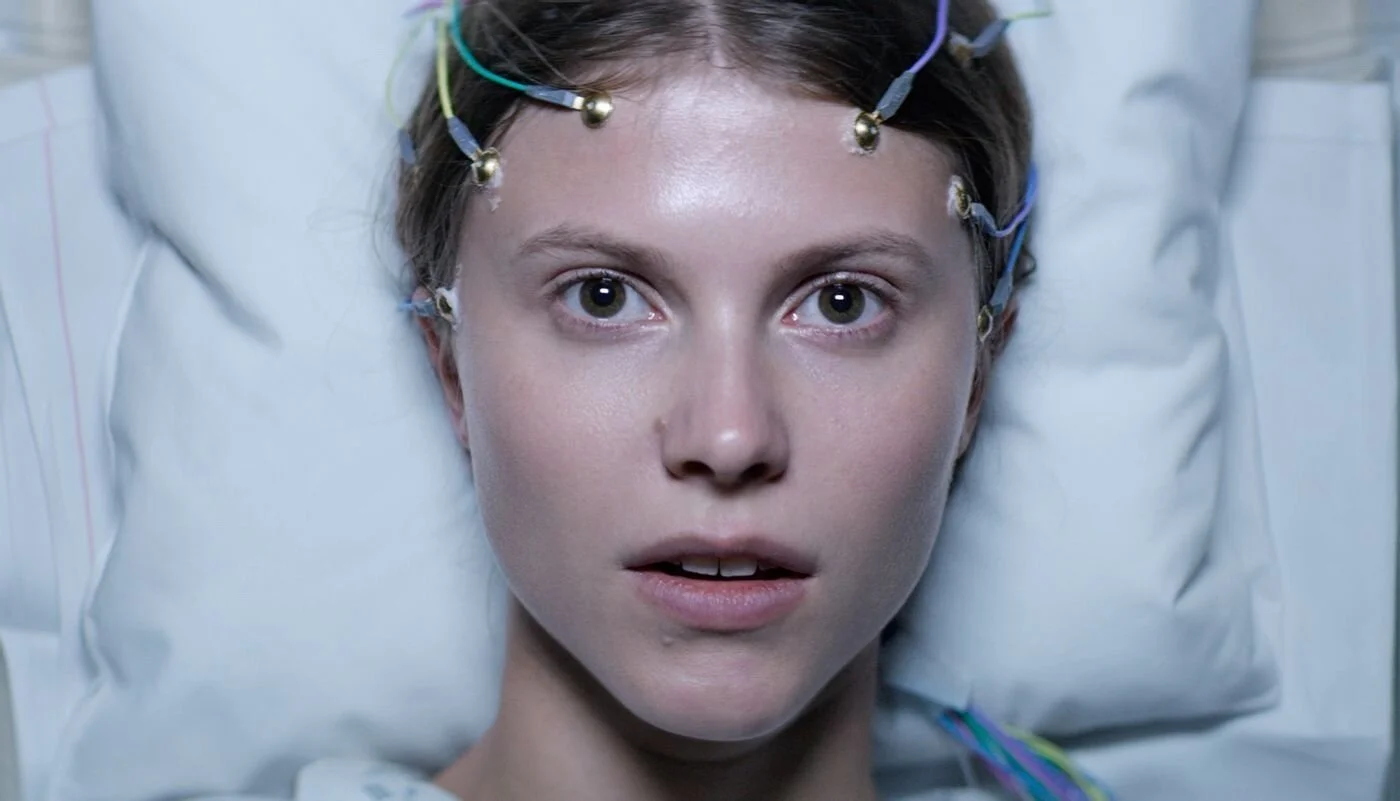
Thelma is a supernatural thriller directed by Joachim Trier and stars Eili Harboe in the titular role. This Norwegian film is a fresh and complex take on “superhero” powers that navigates themes of sexuality, trauma, religion and self-discovery.

The film’s eponymous heroine Thelma is able to make things happen; if she wants something, she can manifest it or quite terrifyingly, make it disappear. Narratively, the exploration of such a supernatural power is rich ground for storytelling, and that’s exactly what Trier has achieved here.

Thelma is a beautifully dark coming-of-age story about a sheltered young woman discovering her identity both as an individual away from her overbearing family and in terms of her sexuality. While her dangerous gift could have just become a metaphorical symbol of her otherness or a delusion born out of repressed sexuality, Trier doesn’t settle for a cinematically metaphoric storyline only. This supernatural gift is real and has very tangible consequences in the film, and a flashback that unfolds alongside the main action of the narrative is rather intense and harrowing and brings the film to a crescendo before the final act.

I also liked how in an interview, Trier said that he wanted to make a film that pays tribute to all the people who feel like “freaks” who don’t fit in and still try to find acceptance in that fact (VG, 2017). And at its most basic, that is exactly what Thelma is, a freak finding her place.

“I feel angry with you, God. Why are you doing this to me? What do you want?”

Visually, Thelma is stunning. There are lingering shots of nature, erotically charged visuals involving snakes, a very Bergmanesque nod to Persona and stunning moments of VFX that bring the consequences of Thelma’s ability to life.

There is also a really clever visual at the beginning and end of the film where the camera pans in and later away from the crowded Frederikkeplassen (the centre of the UiO Blindern Campus), illustrating the sense of one person being lost in a sea of people.

Another sequence that I found to be particularly beautiful was at the Oslo Opera house; I love the way in which the ballet performance on stage melted into shots of Thelma on the brink of an anxiety-induced seizure. Both elements complimented each other and created frenetic energy that really built up the mounting tension of a rising panic attack.

The colour palette used in Thelma is also rather beautiful, as dark, brooding and cold colours are employed for the most part. However, there are moments where a rich blood-red or lush natural green pierces the shot; these snaps of intense colours symbolise danger and transgressing against the norm and are often seen when Thelma has no control over her ability.

4 images from Thelma film. One of Thelma lying on grass, another with a snake coming out of her mouth, a third which is Bergman like (Persona) with two faces overlapping each other and the 4th is a boat on fire

Little Joe Film Review

Directed by Jessica Hausner Little Joe is an indie sci-fi horror that explores genetic modification and motherhood. Emily Beecham stars as Alice Woodard, a plant breeder who has created a new species that gives its owners intense joy…but at what price?

Narratively Little Joe is interesting, there is a clear exploration of deep themes: the mood altering effects of pharmaceuticals, the trials of motherhood and the bastardization of nature through genetic modification just to name a few. But, I would be inclined to say that what really makes this film quite special is the symbolism displayed through visuals and audio.

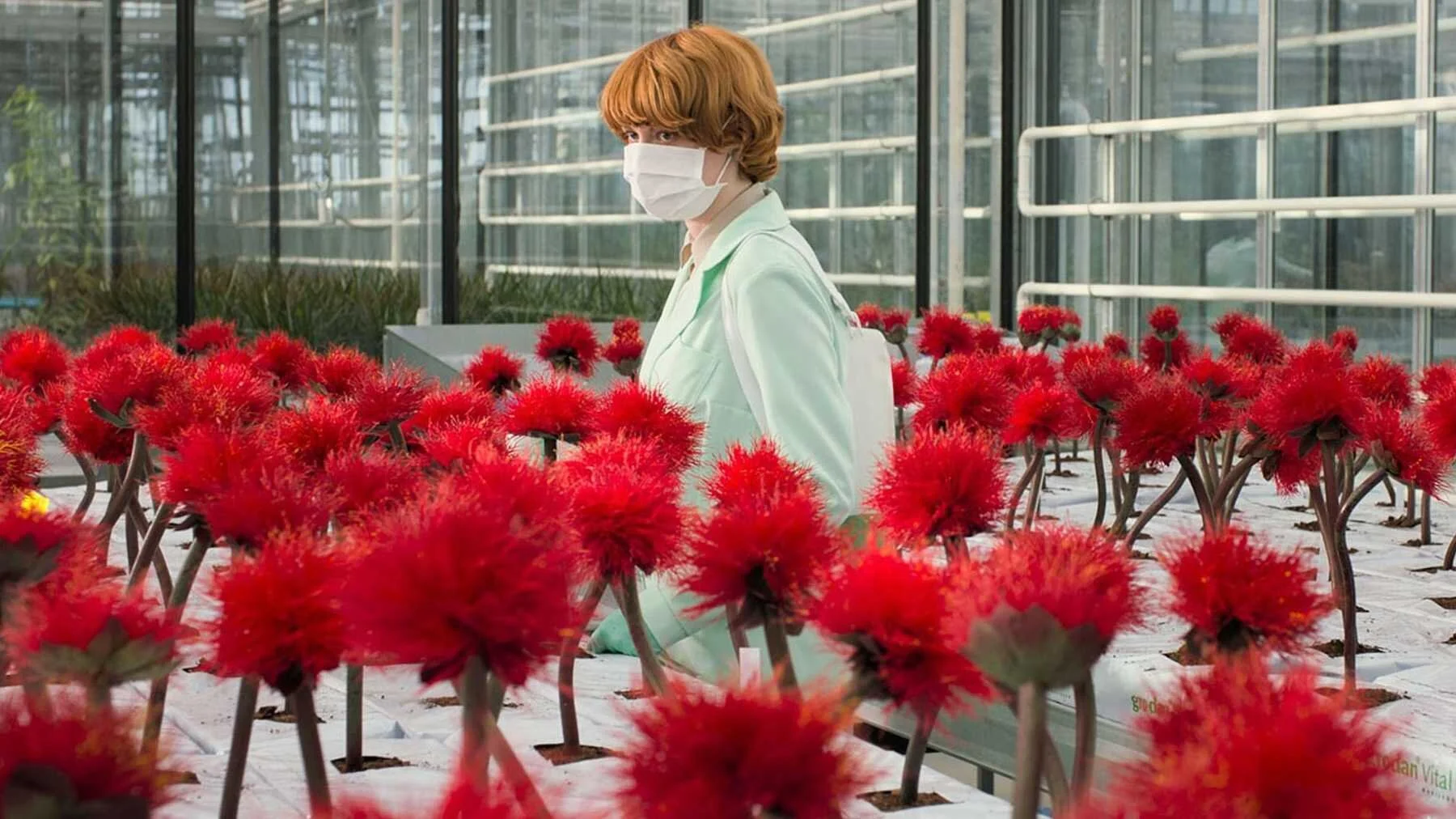
The colour design of this film is one of its most striking features. The lab and uniforms are a pale montone green which are directly juxtaposed with the vibrant red plumage of the Little Joe plant. This use of complementary colours creates a sort of visual symbiosis between the scientists and the plants, but as the film progresses it is clear that this visual harmony is indeed superficial and something far more nefarious is at work. Elsewhere, the colour design sticks to a closer palette of greens, oranges and yellows or the intense mixing of purple and red, the former displaying order and familiarity and the letter another expression of danger.

The camera moves very methodically to create a sense of control and sterileness which soon becomes creepy as it is too perfect. Moreover, this precision of the camera movement also acts as a parallel to what is happening within the lab, the modification of nature has morphed the characters into automatons, they become focused on one singular goal the propagation of the plant as it can’t reproduce on its own.

Another way in which Little Joe creates unease is through its erratic soundtrack. There is an eerie exoticness to the sounds and irregular rhythms which no doubt was used to mirror the strangeness of the plant. And while it can become a little distracting at times for the most part this soundtrack added a curious texture to the film and enhanced the mood.

IMG_9570.jpg

Overall, Little Joe is a peculiar little film that will leave you reeling long after the credits, it’s full of beautiful visuals, uncanny commentaries on society and a really fantastic central performance by Emily Beecham who quite rightly won the Best Actress Award at Cannes last year.

Danish Cinema: Jagten (The Hunt) Review

Directed by Thomas Vinterberg and starring Mads Mikkelsen, Jagten tells the story of Lucas, a warm and kind-hearted school teacher ostracised by his small village, when a lie suggesting that he is a paedophile begins to circulate.

Interestingly (and worryingly), Jagten was inspired by many real-life cases in which false accusations have resulted in similar and far worse outcomes than those portrayed in the film. Also, in many ways, this film is almost a companion piece to, or as Vinterberg himself suggests, is an antithesis to Festen (The Celebration), his breakthrough film, which dealt with a similar issue of child abuse.

Vinterberg cleverly juxtaposes the close-knit charm of village life that Lucas is very much ingrained into at the beginning of the film with his sudden ostracization, and these seemingly nice villagers and close friends very quickly become cruel and violent towards him. It’s a study of how a man’s life and a community as a whole are torn apart by a lie.

The Hunt is a hard film to watch as we know Lucas is completely innocent, and this makes it so frustrating to see him subjected to such relentless viciousness. But this is also where the genius of the film lies because people in real life would act in that way, they would attack or be verbally violent towards someone they wholeheartedly believe to be a child molester; it’s wrong but somehow acceptable behaviour.

Vinterberg also makes it very clear that there are no villains in the film, from the innocent Klara, to the best friend and to Lucas himself. They are simply a group of people who have a massive amount of love for each other and are trying to navigate this inexplicable trauma.

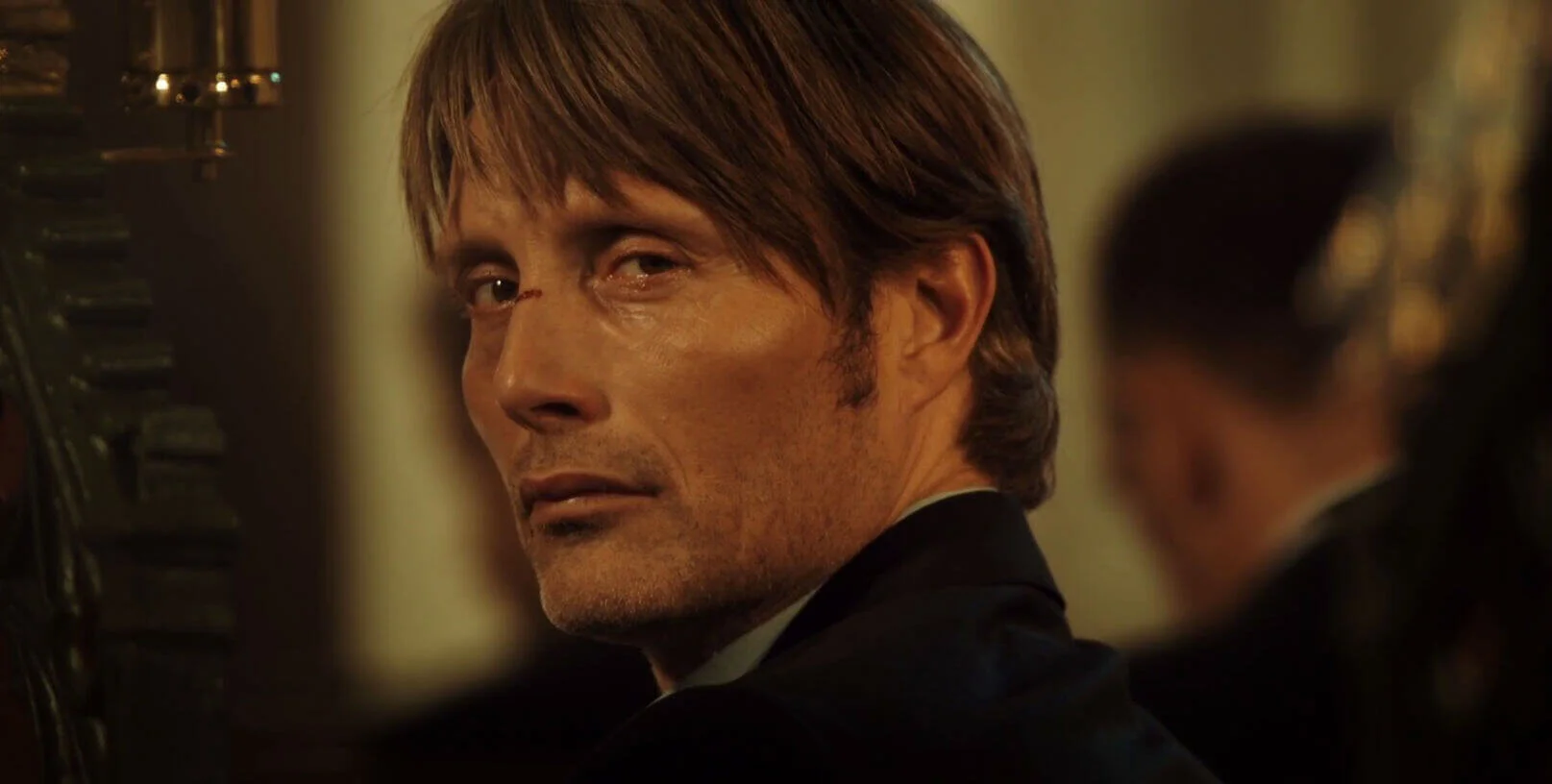
Mads Mikkelsen’s portrayal of Lucas is simply perfect. For anyone only familiar with his work in Casino Royale or Hannibal, where he plays calculating villains, this role may seem rather surprising, but Mikkelsen is such a diverse and truthful performer, and naturally, his best performances are often in Danish productions.

Here in Jagten, he demonstrates a stubborn restraint that is really quite moving as he is just a man desperate for his life to go back to normal. As the tension builds through the film, Mikkelsen’s performance becomes more and more compelling, and one of the best scenes of the film takes place in a church on Christmas Eve, and it’s really quite an excruciating moment to watch.

To bring out the realness of the film’s narrative, cinematographer Charlotte Bruus Christensen uses a handheld camera, and as a result, the audience views the action of the film through an almost documentary-like lens. This, coupled with an abundance of close-up shots, lets the performances drive the film, and that is something that recurs throughout Vinterberg’s filmography (a leftover from his Dogme 95 days, no doubt) which showcases the actors inhabiting their roles completely and a search for authentic fragility.

There are also moments of natural beauty, specifically shots of deer sprinting through woodlands while being hunted, an allusion no doubt to the film’s discussion on predators and prey and the witch hunt that threatens to destroy Lucas’ life.

But more than that it also leans into the idea of masculinity; the annual hunt is a big part of the community; it’s a ritual and a time and place for male bonding. Moreover, Lucas’ son Marcus is given a rifle after turning 16, it’s a symbol of him becoming a man, and perhaps Lucas is symbolically nearly shot at the close of the film to symbolise his loss of masculine power and his lingering ostracisation from his fellow hunters.

IMG_9426.jpg

In conclusion, I feel like The Hunt is perhaps one of the best films made in the 2010s because of its complex and dynamic story that is both important (in a socio-political sense) and compelling to watch. It features sublime cinematography and a career-best performance from Denmark’s greatest actor working today. This is Vinterberg’s masterpiece.

Columbus Film Review

Columbus is video essayist Kogonada’s first feature film. It follows two lost people as they find solace in one another and in the modernist architecture of Columbus, Ohio.

This film hit me hard. The mood of it reminds me of Lost in Translation, and to a certain extent, the relationship that blossoms between Jin and Casey mirrors that of Bob and Charlotte. Two lost souls coming together to heal each other.

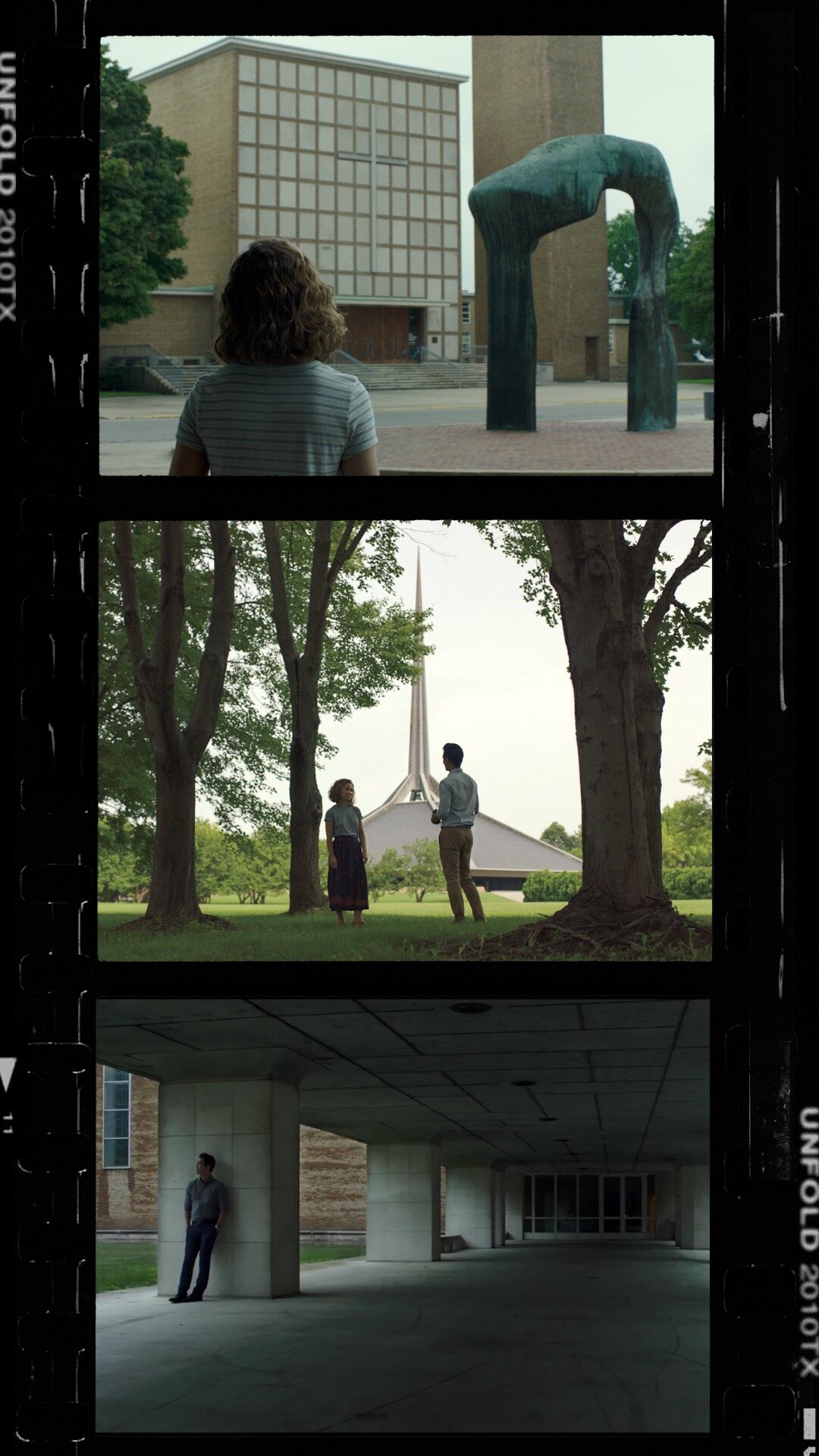
Jin harbours resentment towards his father a renowned Architecture scholar who never seemed to have the time for him, while Casey feels like she has to stick around and forgo pursuing her dreams as her recovering addict mother may be lost without her if she leaves. Jin is adamant that he doesn’t like architecture, but Casey’s passionate and soulful way of looking at the modernist buildings scattered over Columbus is infectious, and he soon finds himself enjoying it and how powerful architecture can be as a healing visual. 

You grow up around something, and it feels like nothing.

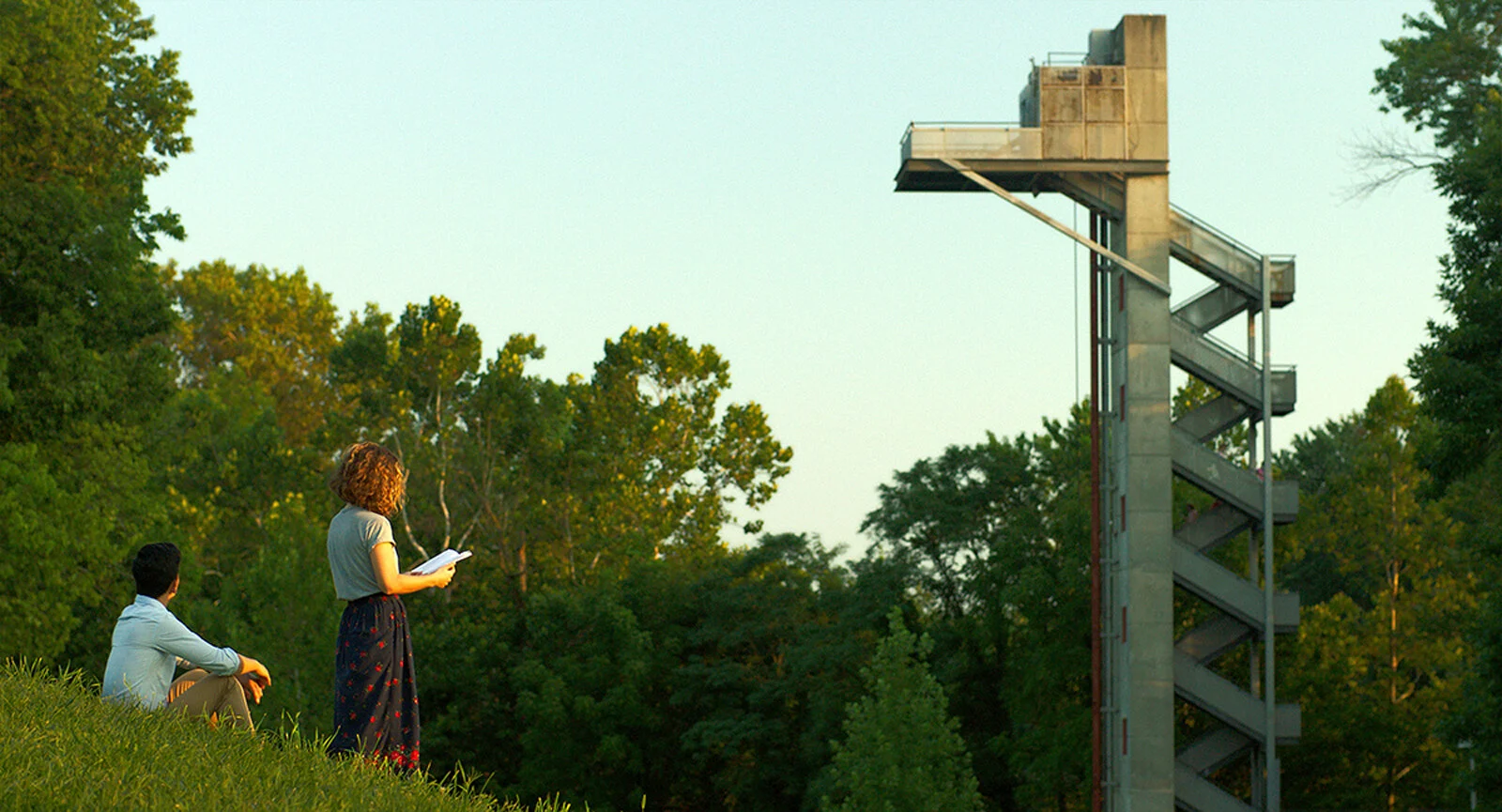
This film is beautiful, the lingering shots of architecture, the use of negative space and the solitude and beauty of modernist structures. There is a soulfulness that permeates every frame, and you find yourself mesmerised by the power of this quiet and thoughtful film.

I myself am a bit of an architecture nerd, and I love how it is discussed that Architecture can be healing, as I find quite often that when I’m feeling down or lonely, looking at beautiful buildings can ease my pain a little. So to say that this film resonated with me would be an understatement; I found it to be a thoroughly cathartic watch, and I will no doubt watch it again and again in the future.

IMG_9144.JPG