Korean Cinema - 싸이보그지만 괜찮아 (I'm a Cyborg, But That's OK) Review

I’m a Cyborg, but that’s OK released in 2006 is Park Chan-Wook‘s 7th film as director and is a romantic comedy set in a mental institution.
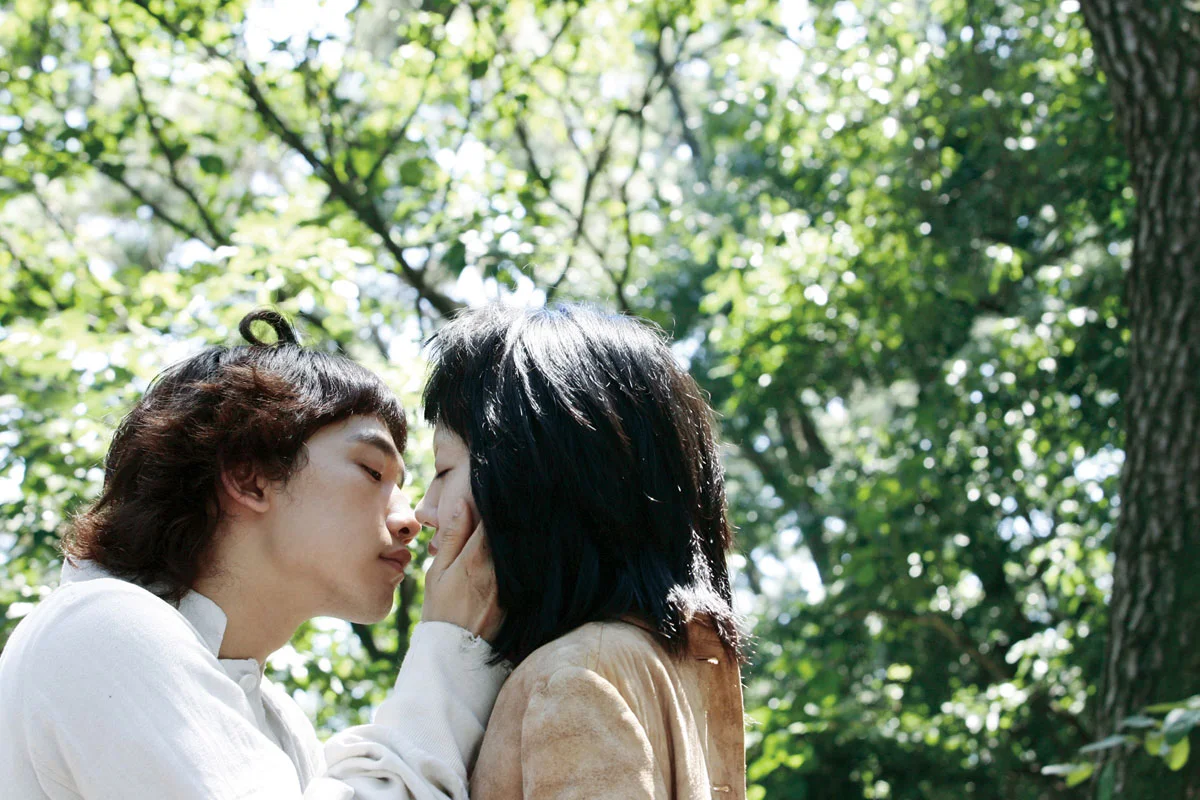
The film follows Cha Young-Goon (Im Soo-Jung) a young woman who believes she is a Cyborg, she wanders around talking to machines and licking batteries to charge and Park Il Soon (Rain) a young man who to his belief can steal people’s skills and traits, he himself wanders around often wearing homemade cardboard rabbit masks spying on people to find possessions he wants to steal from them.

I’m a Cyborg is a fundamentally a love story at it’s heart, a totally oddball, disturbing yet endearing one and the nearest comparisons I can make in western cinema would be Jean-Pierre Jeunet’s Amélie and possibly Eternal Sunshine of the Spotless Mind by Michel Gondry but even these films aren’t a great comparison when you take a look at the film a little deeper. And I must say I fell in love with the tone of the film almost immediately due to its curious mix of cuteness and darkness, at one point Cha goes homicidal and shoots all the doctors at the institution, while this is, of course, a delusion it’s still quite a bloody and jarring moment in the film and the way she transforms into this cyborg killing machine with fingers as guns is quite disturbing yet amusing at the same time. Then in contrast  in another scene Park Il-Soon pretends to fit a device into Cha’s back to help her digest food (as she has been starving herself due to her belief that she is a cyborg) it’s perhaps the cutest moment of the film as us viewers get to see a kind and empathetic side to Park who delicately draws a door on her back with a pencil while pretending that he is actually using a knife to cut her open so he can fit the device , It’s just such a beautiful and sweet moment that melted my heart.

Another great thing about I’m a Cyborg is the cinematography and how lovely the colour palette is, in a way the film feels like an enchanting fairy tale (albeit with a dark undertone) due to the sweeping camera movements, high-key lighting  and the airy colours of the sets make the film seem a lot more light-hearted than it actually is. This contrast in theme – an antisocial kleptomaniac & a delusional woman who is trying to find a way to kill orderlies to find her purpose in life find love and codependency in a mental institution – and presentation – pastel colours, bright lighting, quirky humour and cuteness abound – forms something of an oxymoron which in itself is representative of the film which is actually really clever.

INACBTO.1.gif

Basically, Park Chan Wook is a genius and you’re doing yourself an injustice if you don’t watch this film.

ps. let me know your thoughts on the film in the comment section below I would love to know what you thought of this little gem.
High-Rise Review: Brutalist architecture & the fall of society

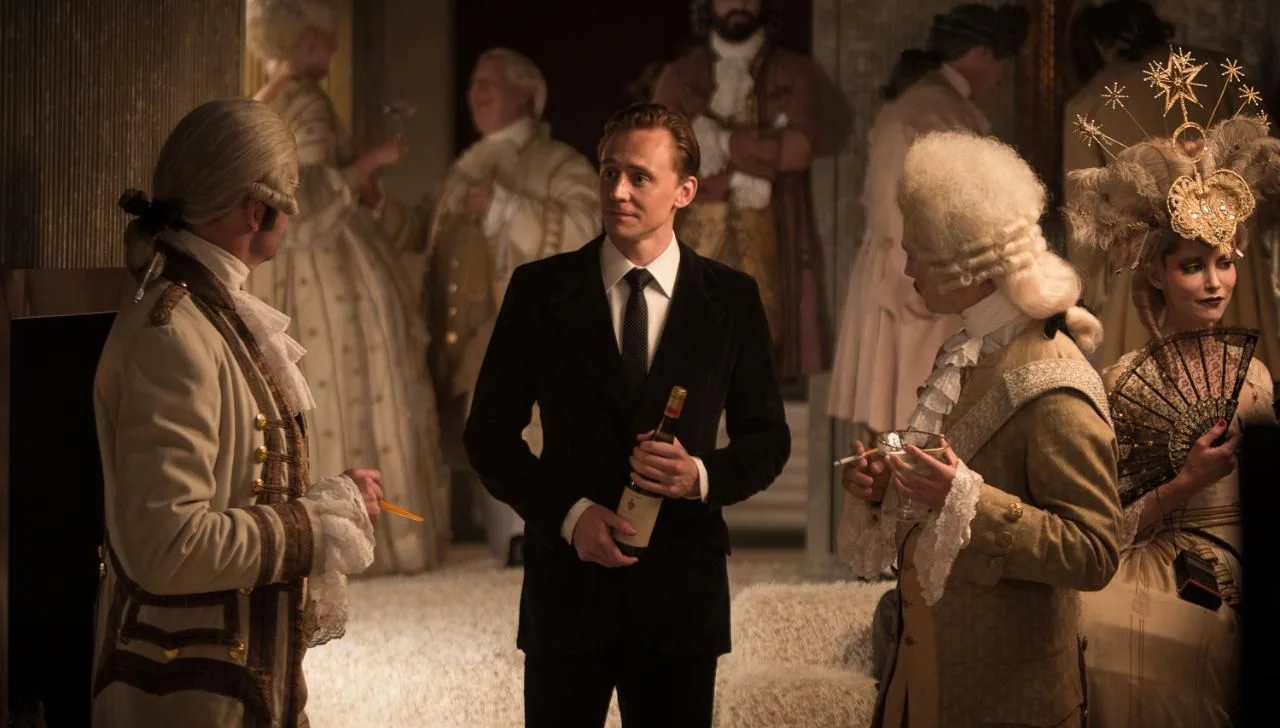
Ben Wheatley’s cinematic adaption of High-Rise, the iconic J.G Ballard novel of the same name, is nothing short of a heady trip through the decay of society using the thoroughly modern (for its time) high-rise complex as a microcosm.

In essence, the film is Kubrickian in style and Orwellian in prothetic tone; it’s a disturbingly amusing Social Satire that will take you on a diabolically dizzying kaleidoscope of a journey through a society governed by debauchery and opulence.

The film opens at the end with a bedraggled Robert Laing creeping around the ruined High-Rise and tucking into a roasted dog on his balcony. This scene right away sets the tone of the film; it’s surreal and totally bonkers. Moreover, starting the film in a non-chronological order shows the viewers the consequences before they see the actions that got the characters to this disastrous place; thus, a curiosity as to how this happened bubbles.

Cleverly, a stark contrast from the squalor of Laing’s surroundings is made when we jump back three months to when the young Doctor first arrived at the pristine High-Rise building. The complex is in the Brutalist architecture style, which acts as a metaphor to mirror the story; the inhabitants are just as harsh and domineering as the space they occupy.

To be honest, Brutalism was the only architectural style the filmmakers could have used for the story; anything else would have missed the point and being someone who is mildly obsessed with the style, I really liked the building and the symbolism. Laing’s apartment is severe and empty, and the self-contained amenities of the complex, such as the onsite Supermarket, have a Warholian sterileness to them. This is a Retro-Future that is very much a satire of what today’s society is turning into, which is why J.G Ballard’s novel and this movie, in turn, are still so relevant to a modern audience.

The High-Rise is subjected to not-so-subtle class divisions, the poor families at the bottom (although they are still wealthy enough to live in the establishment, unlike most of society), Upper-Class Professionals such as Laing live in the midsection of the building, and the top of the High-Rise belongs to the Super-Rich and the Architect himself.

The Architect is a regal and self-appointed “god” figure named Anthony Royale (played deftly by Jeremy Irons) who sections himself off in the Penthouse suite complete with a gorgeous garden that Laing visits and is surprised to see a horse on the “44th floor”. The sheer arrogance of Royal is ultimately his downfall, demonstrating that those who put themselves above society will sooner or later have to answer to it, no matter how savage or civilised it is.

Everyone seems to get into everyone’s business in the High-Rise, which takes a toll on the usually secluded Laing, who slowly becomes unhinged, and the divide between the top and the bottom of the building intensifies as the manufactured society slowly falls to pieces as everyone gives in to their carnal urges that result in raging parties to rival the bacchanalias of ancient Rome, fistfights and rape.

This, in essence, explores the very idea of how the survival of society depends on control and suppression of our innate animalistic desires and pleasure-seeking and that such a decayed and damaged society is a feasible future.

In conclusion, this film is not for everyone, but for those who long for a return of cerebral and eccentric films that study the human condition then give it a watch and you may just be surprised as to how much you’ll think about it after you leave the cinema, unlike the usual mass-produced popcorn fare that we seem to greedily consume.

High rise tom.gif

A disturbingly amusing Social Satire that will take you on a diabolically dizzying kaleidoscope of a journey through a society governed by debauchery and opulence

Now I’m off to read the novel by J.G Ballard, care to join me?

The Revenant Review

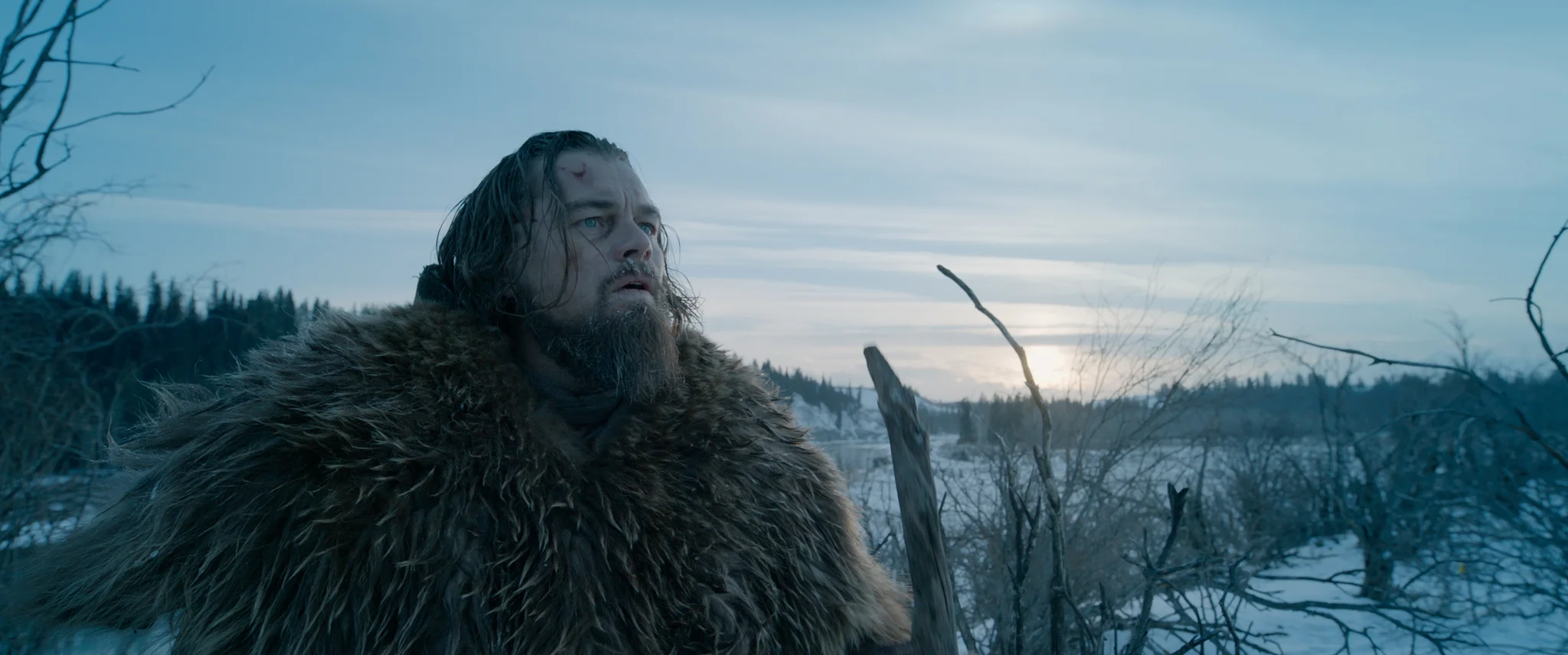
Director Alejandro G. Iñárritu and Cinematographer Emmanuel Lubezki’s latest team-up is hardly a film and more like a wildly poetic audio-visual experience. From the moment the film begins to when the credits roll The Revenant is an exquisitely engaging affair that transports you into the icy and unforgiving world of a group of fur trappers and hunters trying to navigate the 19th century Louisiana Purchase.

Leonardo DiCaprio and Tom Hardy are exceptional in their roles as Hugh Glass and John Fitzgerald respectively and it is therefore unsurprising that both have received Academy Award nominations for their brutal performances. DiCaprio’s Glass is a man hellbent on exacting his revenge for the unlawful murder of his beloved son and his ferocity and tenacious hold onto his life is somewhat awe-inspiring seeing that he almost dies on several occasions (The superbly shot Bear Mauling, near suffocation, Falling off a cliff, being shot at and stabbed)  and in most cases it would have been easier for him to give in to the cold embrace of death. And it’s through this obsessive determination that sees Glass soldier on through one tortuous ordeal after another that when he finally meets with the cowardly Fitzgerald that one of the most nail-biting scenes take place that I’ve seen in a film for a very long time.

Emmanuel Lubezki’s cinematography is perhaps the greatest thing about this film, sure the performances are superb and the soundtrack by Ryuichi Sakamoto is hauntingly beautiful, and there’s that certain quote “I ain’t afraid to die anymore. I’d done it already” which is surely going to become iconic someday, but its the visuals of this film that really make it as truly sublime as it is. And while watching The Revenant I found myself comparing it to another piece of Lubezki’s work The New World by the illustrious Terrence Malick. And I found that what these two films had in common (apart from Mr Lubezki) was that they were both slow and poetic journeys and what better way to capture these profound films than with long languid lingering shots of action and in doing so I believe that this film is in all its visceral and grisly realism cinematically perfect.

Overall The Revenant is a gloriously bloody tale of one man’s struggle to appease his desire to seek revenge against another man and if you love great (I need a better word!) exceptional, stunning, awe-inspiring, simply sumptuous cinematography and a damn good storyline then go and see The Revenant, yes its 3 hours long but its filmmaking at its finest and those 12 Academy Award nominations just go to prove my point.

Carol Review

Todd Haynes has made a perfect film with Carol, in the lead roles Mara and Blanchett are sensational, the mise-en-scene is sublime, the shooting of the film on Super 16 mm gives it this utterly gorgeous vintage feel and the story is really quite heart wrenching (and while it doesn’t take much to make me cry at the cinema this film hit me quite hard).

Set in 1950’s America, Carol explores the burgeoning relationship between a young shop girl Therese and an unhappily married housewife the eponymous Carol and how giving into their feelings for each other potentially ruins the laters life. Based on Patricia Highsmith’s Semi-autobiographical novel The Price of Salt the film feels very much rooted in reality which makes some of the scenes hard to watch, particularly when Carol and Therese discover that a seemingly kind and down on his luck salesman turns out to be a private investigator charged with the task of gathering evidence for Carol’s Husband to use against her in court and when Carol breaks down in a meeting between lawyers to settle the matter of custody she essentially gives in and admits defeat as there was no way she could win due to the overwhelming evidence of her homosexual behaviour that would essentially deem her to be an unfit mother if it were to be exposed.

All in all Carol is a very important film, it signifies how far society has come from the 1950s (when a woman had to be psychiatrically tested to see if she was sane for having a sexual relationship with another woman) to now, and while the LGBT community is slowly finding acceptance in society there still is a long way and therefore perhaps this film (like Blue is the Warmest Colour did in 2013) can help highlight the completely and utterly beautiful and real love that two women can share for each other so that society can stop judging and continue accepting.

This was stunningly shot, emotionally beautiful cinema at its best and most certainly one of the finest films of the year.

P.S. I’ll leave you with this haunting song from the Final episode of Hannibal as it kind of fits…and I’m just obsessed with Hannibal 😂

French Cinema - L'écume des jours (Mood Indigo) Review

I decided to watch L’Écume des Jours (Mood Indigo) for three reasons: it’s French (I’m trying to learn this beautiful language with the help of cinema), it stars Audrey Tautou (from Amelie, which is one of my all-time favourite films ever) and the film is directed and written by Michel Gondry (Eternal Sunshine of the Spotless Mind).

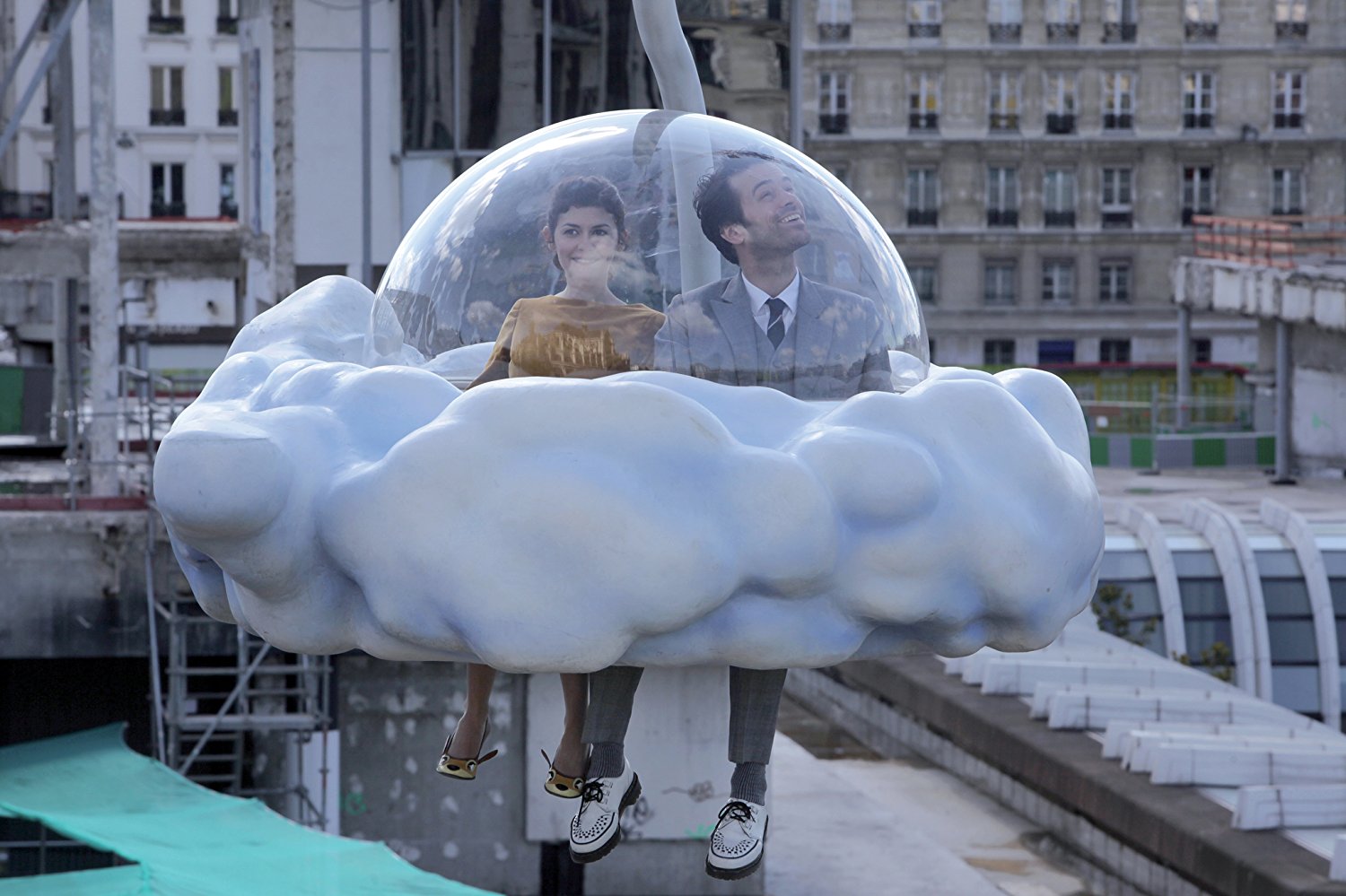
My goodness, what a bizarrely surreal and poetical film. In Mood Indigo everything is extremely unusual, the visuals are mind blowing and the characters are so absurd it’s brilliant. The story takes place in a world so unlike ours, where everything seems to be alive and the people a larger than life itself. For the duration of the film, we follow the relationship of Colin (Romain Duris) and Chloé (Audrey Tautou) from its awkward inception at a friends party to the bittersweet end. It’s so strange (but reassuring) how a storyline so simple and generic as love could be made into such a groundbreaking and stunning piece of cinema, and it just goes to  show it’s not what you do but how you do it that sets things apart (another unusual love story that comes to mind is the inventive 500 Days of Summer).

Early on in the film, Colin is jealous of his two closest friends Nicolas (played supremely by Omar Sy) and Chick having found love, he boldly stands up and proclaims “I demand to fall in love, too!” I found this small moment quite interesting as we as humans seem to feel as if it’s our absolute right to find love when in reality to find true love is pure luck, coincidence and a matter of being in the right place at the right time. This is expressed quite well when Colin meets Chloé, Colin had to be invited by Nicolas who just so happened to be romantically involved with the Hostess Isis. All these coincidences and chances lead to the beautiful romance the two main characters shared. Perhaps the secret is to demand it after all as surely then we would actively seek love?

LDJ.gif

Overall this film is stunning and so quirky that I don’t want to give too much of it away in this review (everything you need to know is in the Trailer). So if you love French Cinema starring likeable leads in a story that is utterly surreal then have a watch, if not well you’re missing out on one of the most interesting films of the 21st Century.